Making Our Workplaces More Sustainable
Since its creation, ARTE has placed environmental responsibility at the heart of its values. Across its sites in France and Germany, ARTE works to reduce energy consumption, improve waste management, encourage low-carbon mobility, promote more sustainable food services, and protect biodiversity.
Building Management: Energy, Water and Recycling
ARTE’s Strasbourg headquarters: certified for energy performance
In 2016, ARTE’s headquarters in Strasbourg became the first television broadcaster in France to receive ISO 50001 certification for energy management. Since then, ARTE has continued to improve the energy performance of its buildings and operations, with a target of reducing energy use by 55% by 2028, compared with 2013.
Therefore, ARTE closely monitors and optimizes its most energy-intensive activities, raises staff awareness, and includes energy performance criteria in its purchasing policy. As a result, annual energy consumption fell from 8.2 GWh in 2013 to 3.8 GWh at the end of 2025 – a 52.7% reduction, including a 76.6% decrease in gas consumption and a 43.1% decrease in electricity use.
ARTE's three sites in Strasbourg, Issy-les-Moulineaux and Baden-Baden are powered exclusively by renewable electricity. Attention is also paid to water management: the ARTE building has been hydro-efficient as far as taps for running water are concerned since 2013, and bottled water fountains have been replaced by filtered water fountains.
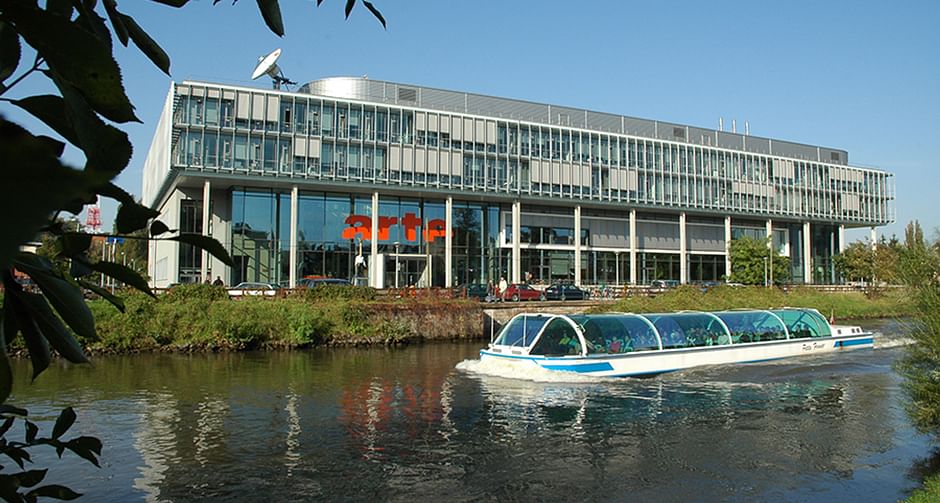
ARTE’s headquarters in Strasbourg is ISO 50001– certified for energy management. © Patrick Bogner
Recycling and Reuse
More broadly, ARTE promotes sustainable practices across all its offices. Waste is sorted and recycled, including paper, cardboard, plastic, glass, electrical equipment, organic waste, batteries and light bulbs. ARTE also supports reuse initiatives by working with partner organizations that give a second life to materials such as plastic caps and advertising banners.
Transport: Encouraging Low-Carbon Mobility
ARTE encourages employees to choose more sustainable forms of transport and to reduce car use whenever possible.
Staff are supported in cycling to work through practical measures such as covered bicycle parking, an annual bicycle maintenance service, and access to a fleet of standard and electric bikes.
Since 2013, a car-sharing station has been available directly outside the Strasbourg building, replacing ARTE’s former internal vehicle fleet.
For employees using electric vehicles, charging stations have been installed at the Strasbourg and Issy-les-Moulineaux sites.
Catering: Prioritising Local, Organic and Seasonal Products
Since 2011, ARTE’s staff restaurant has followed a more sustainable food policy, with a strong focus on local, organic and seasonal ingredients.
A significant proportion of fruit and vegetables served come from local organic farming. All meat — including beef, pork, lamb and poultry — is sourced from local producers. Fresh, seasonal ingredients are prioritized throughout the menu.
To reduce the carbon footprint of food services, ARTE has also adapted its menus by lowering the share of meals based on ruminant meat and expanding vegetarian options. As a result, consumption of vegetarian meals increased by 70% between 2019 and 2023, while the share of beef-based meals fell by 38%.
Reducing Food Waste and Single-Use Plastic
ARTE has also implemented measures to reduce food waste and recover organic waste more effectively. Following an in-depth assessment, targeted actions were introduced to identify the main sources of waste and reduce them significantly.
In addition, the staff restaurant has been pursuing a zero single-use plastic approach since 2018. PET bottles have been replaced by reusable returnable bottles, and vending machines no longer provide disposable cups.
Biodiversity and Green Spaces
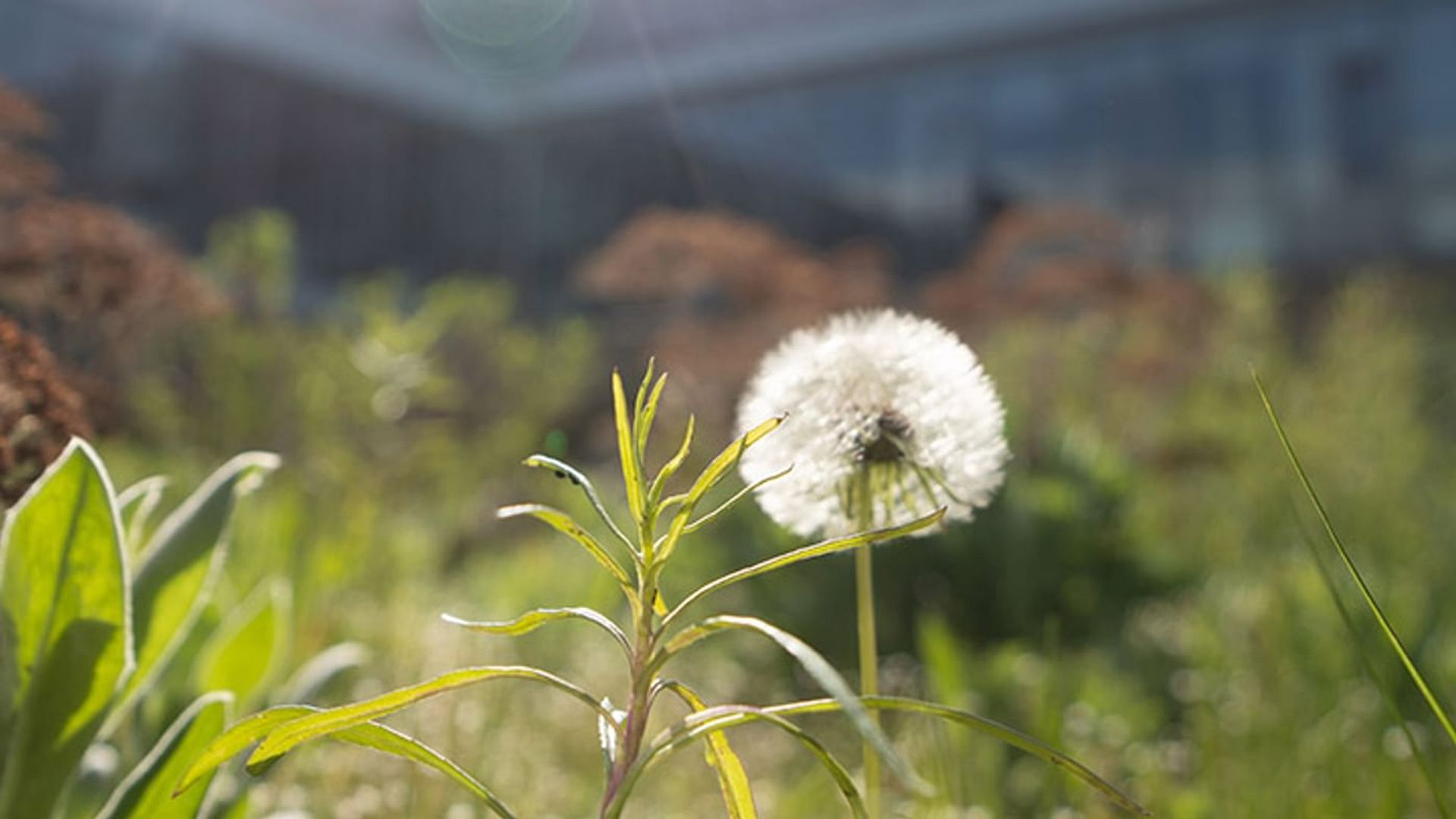
Protecting biodiversity has long been part of ARTE’s environmental approach. When the Strasbourg headquarters was built in 2003, green roofs were included from the outset, among them a pollinator-friendly meadow.
More sustainable methods are likewise used to maintain the outdoor spaces, including planting hedges and groves of local species, using mulch in planted areas, and significantly reducing watering needs.
ARTE is also committed to reducing light pollution. The building is not illuminated at night, and the parking area lighting has been upgraded with energy-efficient LED systems.